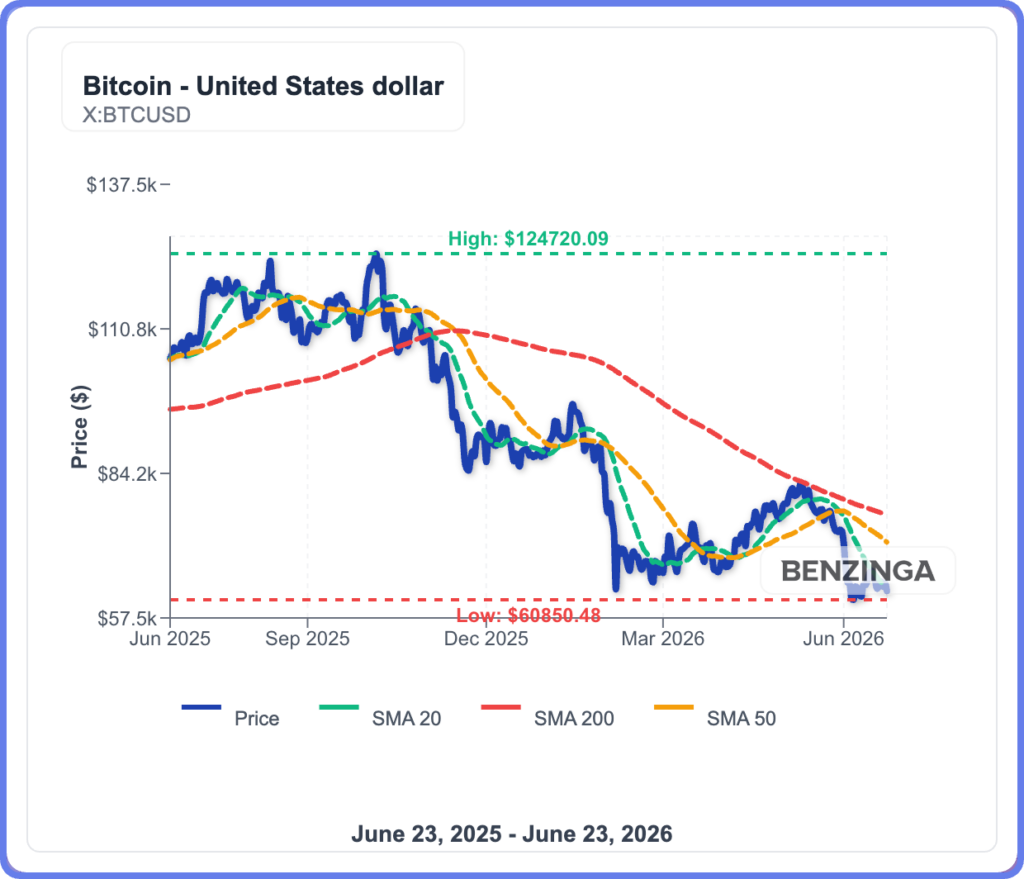
Bitcoin (CRYPTO: BTC) breaking below $90,000 on Monday has prompted crypto analyst Benjamin Cowen to draw striking parallels to the 2019 macro setup.
What Happened: In a podcast published on Sunday, Cowen warned that Bitcoin’s current downturn, arriving just as quantitative tightening (QT) ends, is tracking almost identically to 2019.
Back then, BTC continued bleeding for months after the Federal Reserve shifted from QT to quantitative easing (QE).
Cowen’s base case mirrors that earlier cycle:

Considering trying out virtual dating RN? We got you. Here are some tips to turn you into a video dating pro — instantly.
- Six months of consolidation
- Three straight red monthly closes (Oct–Dec)
- A relief rally toward the 200-day MA in early 2026
- Followed by a final leg down into mid-2026
Altcoins may fare worse. Cowen expects one last spike in Bitcoin dominance as traders waiting for a QE-driven rescue capitulate, similar to the broad altcoin weakness seen in late 2019.
While he acknowledges a slim chance of new all-time highs, Cowen points to breakdowns in key indicators such as the weekly RSI as classic bear-market signals.
He adds that Bitcoin’s ROI curve still aligns with previous cycle trajectories.
Also Read: Bitcoin, Ethereum, XRP, Dogecoin Drop 5% On Rising Japanese Bond Yields
Are You Taking One of These 9 “Memory Erasing” Prescriptions? [ad]
You may think your memory loss is just a sign of getting older, but one of these 9 drugs could actually be damaging your brain... These 9 prescription drugs have now been linked to Alzheimer's disease diagnoses. If you're over the age of 60, and you're taking even 1 of these 9 drugs, your brain could be at risk. Click here to learn more.
Why It Matters: Cowen emphasized that the end of QT does not mean immediate liquidity expansion.
In 2019, QT ended in July, but the Fed’s balance sheet didn’t begin growing until September, and Bitcoin kept sliding in the meantime.
He expects a similar lag now, potentially stretching well into 2026, reinforcing the idea that the current decline could be the opening phase of a larger macro downturn.
Still, Cowen frames this as opportunity rather than disaster.

If you can’t decide whether to get the 2-in-1 Windows tablet hybrid, traditional laptop, or desktop, we’re here to help.
If the pattern holds, he believes investors will eventually look back at 2025–2026 as a textbook bear-market window, painful, but ultimately lucrative for those who waited patiently.
Read Next: